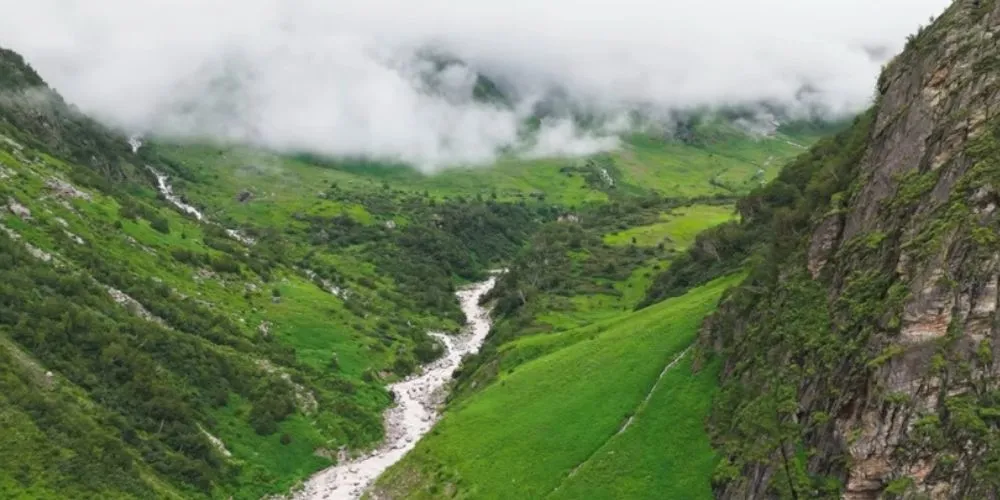
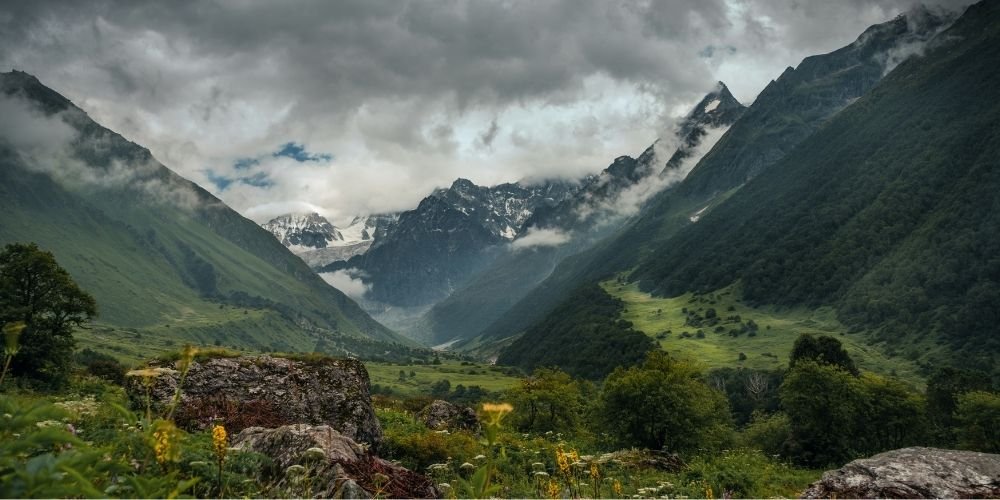
The Valley of Flowers National Park is one of India’s most beautiful Himalayan treks, taking visitors through a UNESCO World Heritage Site known for its colourful alpine meadows, glacier-fed streams, waterfalls, and breathtaking mountain scenery. Located in the Chamoli district of Uttarakhand within the Nanda Devi Biosphere Reserve, the valley sits at an altitude of about 3,658 metres and comes alive between mid-June and mid-September with over 600 species of Himalayan wildflowers. Discovered by British mountaineer Frank Smythe in 1931 and later designated a national park in 1980, the valley is today one of the most sought-after trekking destinations in India for nature lovers, photographers, and adventure enthusiasts.
Trek Details
The Valley of Flowers Trek is a 38 km round-trip trek that passes through scenic forests, rivers, waterfalls, and flower-filled meadows surrounded by Himalayan peaks. The trail follows the route from Pulna to Ghangaria and onward into the valley, offering spectacular views of the Pushpavati River, glaciers, and rare Himalayan flowers such as the Blue Poppy and Brahma Kamal. Many trekkers also combine the journey with a visit to Hemkund Sahib, a revered Sikh pilgrimage site located at an altitude of 4,329 metres.
Trek Difficulty
The Valley of Flowers Trek is rated easy to moderate, making it suitable for beginners, families, photographers, nature lovers, and reasonably fit senior citizens. The trail is well-marked, non-technical, and follows a gradual ascent from Pulna to Ghangaria before continuing into the valley. No prior trekking experience or climbing skills are required. However, those extending the trek to Hemkund Sahib should be prepared for a steeper and more demanding climb at higher altitude.
Trek Route: The trek follows the route: Rishikesh/Haridwar – Joshimath – Govindghat – Pulna – Ghangaria – Valley of Flowers. Vehicles operate up to Pulna, after which the trek begins.
How to Reach Valley of Flowers
By Air: The nearest airport is Jolly Grant Airport in Dehradun, 295 kms from Govindghat. Daily flights operate from Delhi, Mumbai, and other major cities. From the airport, take a taxi to Rishikesh (30 kms) and then continue to Govindghat.
By Train: The nearest railway stations are Haridwar and Rishikesh, approximately 272 kms from Govindghat. Both stations are well-connected to Delhi and major cities. From Haridwar/Rishikesh, take a GMOU/UKRTC bus or hire a taxi (costs approx. ₹5,000–7,000 one way) to Joshimath.
By Road: From Delhi, the distance is 495 kms to Joshimath, taking 10–12 hours. Overnight GMOU/UKRTC buses are available from Delhi and Haridwar. You can also hire a private taxi. From Joshimath, drive 22 kms (45 minutes) to Govindghat. Shared jeeps are available for ₹50–100 per person.
Last Motorable Point: Govindghat is the final destination reachable by road. All roadways lead here. From Govindghat, visitors must trek 16 kms to the Ghangaria base camp, though after the 2013 floods, the path has been rerouted. Alternatively, take a shared jeep 4 kms from Govindghat to Pulna, then trek 10 kms to Ghangaria.
Helicopter Option: Helicopter services operate during the season from a helipad near Govindghat to Ghangaria. The fare is approximately ₹3,500 per person one way (approx ₹7,000–10,000 round trip). Helicopter schedules depend entirely on weather, and flights get cancelled during heavy monsoon days. From Ghangaria to Valley of Flowers, you still need to trek 3.5 kms on foot as there is no motorable road or helicopter service for this last stretch.
Starting Point & Base Camp: The trek officially begins from Govindghat, with Pulna (4 kms away by road) serving as the practical starting point for the hike. Ghangaria (2,926 m) is the main base camp and the gateway to both the Valley of Flowers and Hemkund Sahib.
Best Time to Visit Valley of Flowers
The Valley of Flowers National Park is open from June to October, with the best blooming season falling between mid-July and mid-August, when hundreds of Himalayan flower species blanket the valley. June offers fewer crowds and early blooms, while September brings clearer weather and quieter trails. Although the park remains open until October, the flowering season largely ends by mid-September.
Itinerary for Valley of Flowers Trek
Day 1: Rishikesh to Karchi Base Camp – Drive approximately 255 kms from Rishikesh to Karchi (10–11 hours). Enjoy scenic views of the Alaknanda River, Garhwal valleys, and Himalayan peaks along the route.
Day 2: Karchi to Ghangaria via Pulna – Drive 38 kms to Pulna, then trek 9 kms to Ghangaria (5–6 hours). Ghangaria serves as the base for both the Valley of Flowers and Hemkund Sahib treks and offers accommodation, restaurants, and a Gurudwara.
Day 3: Ghangaria to Valley of Flowers and Back – Trek 3.7 kms each way to the Valley of Flowers National Park. Spend the day exploring colourful alpine meadows, streams, glaciers, and Himalayan flora before returning to Ghangaria.
Day 4: Ghangaria to Hemkund Sahib and Back (Optional) – Trek 6 km each way to Hemkund Sahib, one of the world’s highest Gurudwaras, situated beside a glacial lake at 4,329 metres. The trail is steep but highly rewarding.
Day 5: Ghangaria to Pulna and Drive to Karchi – Trek back 9 kms to Pulna and drive to Karchi for an overnight stay.
Day 6: Karchi to Rishikesh – Drive back to Rishikesh, concluding the trek.
Note: If you are short on time, you can skip Day 4 (Hemkund Sahib) and combine Days 5 and 6 for a shorter itinerary.
Trekking Essentials
- Footwear: Wear sturdy, water-resistant trekking shoes with good grip. A walking stick is highly recommended for descents.
- Clothing: Pack quick-dry clothes, a fleece or warm jacket, thermals, woollen cap, gloves, extra socks, sunglasses, and a windproof layer. Nights in Ghangaria can be quite cold, especially during the trekking season.
- Rain Protection: Carry a raincoat or poncho and a waterproof backpack cover, as rain is common during the flowering season.
- Backpack: A 30–40L backpack is sufficient. For day hikes to the Valley of Flowers or Hemkund Sahib, a small daypack is useful.
- Food & Water: Carry a reusable water bottle, energy bars, and packed snacks, especially for the Valley of Flowers trek where food options are limited.
- Essentials: Sunscreen, toiletries, personal medicines, a basic first-aid kit, power bank, torch, photo ID, and waterproof pouches for electronics are useful additions.
- Responsible Trekking: Avoid littering, carrying unnecessary weight, using single-use plastics, or disturbing the valley’s protected flora.
Permissions Required for Trek
Permit is required from the Forest Department at Ghangaria to enter the Valley of Flowers National Park. There is a ticket counter at the entry gate in Ghangaria where you can purchase tickets on the spot with no advance booking required.
- Indian Nationals: ₹150 for a 3-day pass, ₹50 for each additional day
- Foreign Nationals: ₹600 for a 3-day pass, ₹250 for each additional day
- Students (18+): ₹100 (Indian) with valid ID
- Children under 12: Free entry
It is better to purchase your ticket on the day you arrive at Ghangaria so you can start your trek to the valley early the next morning. The park gates open at 7:00 AM, and the last entry is at 2:00 PM. All visitors must begin their return trek by 1:30 PM and exit the park by 5:00 PM. Overnight camping inside the valley is strictly prohibited.
A trekking medical certificate is compulsory at the time of reporting only (with 30 days of validity), duly signed by a registered medical practitioner (MBBS). If you visit Hemkund Sahib, there is no requirement of any permission beyond the Valley of Flowers permit.
Trekking Tips & Survival Hacks: Start your trek early and always carry a raincoat or poncho, as weather in the Himalayas can change quickly. Pack light, stay hydrated with a reusable water bottle, and carry energy bars or snacks for the trail. Give your body time to acclimatize, especially if you plan to visit Hemkund Sahib. Carry cash, as ATMs are limited beyond Joshimath, and download offline maps due to patchy mobile connectivity. Follow responsible trekking practices by avoiding littering, keeping noise levels low, and not disturbing the valley’s protected flora.
Accommodation & Trek Costs
Accommodation is available at Govindghat, Ghangaria, and Joshimath, ranging from budget guesthouses to comfortable hotels. Ghangaria is the main trekking base and can get crowded during peak bloom season, so advance bookings are recommended. Independent trekkers can expect to spend approximately ₹5,000–₹8,000 on a budget trip and ₹12,000–₹20,000 for a more comfortable experience. Trek packages typically range from ₹10,000–₹15,000 per person.
Nearby Places to Explore: Several attractions can be combined with the trek. Badrinath Temple (25 kms from Govindghat) is one of the Char Dham pilgrimage sites, while Mana Village (28 kms) is India’s last village near the Indo-Tibet border and the starting point for the scenic Vasudhara Falls trail. The sacred river confluences of the Panch Prayag can be seen along the route, and Joshimath serves as the gateway to several Himalayan destinations, including Auli. Trekkers can also visit Hemkund Sahib, a revered Sikh pilgrimage site beside a glacial lake at 4,329 m, or extend their journey to Rishikesh and Haridwar for adventure activities and the famous Ganga Aarti.
Final Thoughts
The Valley of Flowers National Park is one of the most rewarding Himalayan experiences, combining a UNESCO World Heritage Site, breathtaking landscapes, and a beginner-friendly trek into one unforgettable journey. Combined with visits to Hemkund Sahib and Badrinath Temple, it offers a perfect blend of nature, adventure, and spirituality in the Garhwal Himalayas.
By: Anushka Singhal