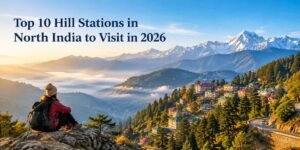
Kuari Pass Trek, also known as the Lord Curzon Trail, is a 6-day, 60 kms Himalayan classic in Uttarakhand that takes you to about 3,815–3,820 m (12,516 ft) for front-row views of Nanda Devi, Dronagiri, Hathi–Ghoda, Neelkanth, Chaukhamba and a whole wall of 7,000-m peaks. It’s rated easy–moderate, stays open for roughly nine months a year (barring peak monsoon), and threads together oak–rhododendron forests, high-altitude bugyals like Gorson, remote shepherd settlements and snowy ridge walks above Auli, making it one of the best first high-altitude passes for beginners who still want “big mountain” drama.
Kuari Pass Trek Overview
Set in the Garhwal Himalaya above Joshimath and Auli, Kuari Pass lets you trek along long panoramic ridges with uninterrupted views into the inner sanctuary of the Nanda Devi massif. The route begins at the road-head village of Dhak (or nearby Karchi/Tapovan, depending on the operator), then passes through stepped fields and small mountain hamlets before entering dense oak–rhododendron forests and emerging onto wide alpine meadows on the higher slopes. Camps are spaced to keep altitude gain gradual and daily walking hours reasonable, so a reasonably fit first-timer with basic preparation can complete the trail without feeling overwhelmed.
Kuari Pass Trek Highlights
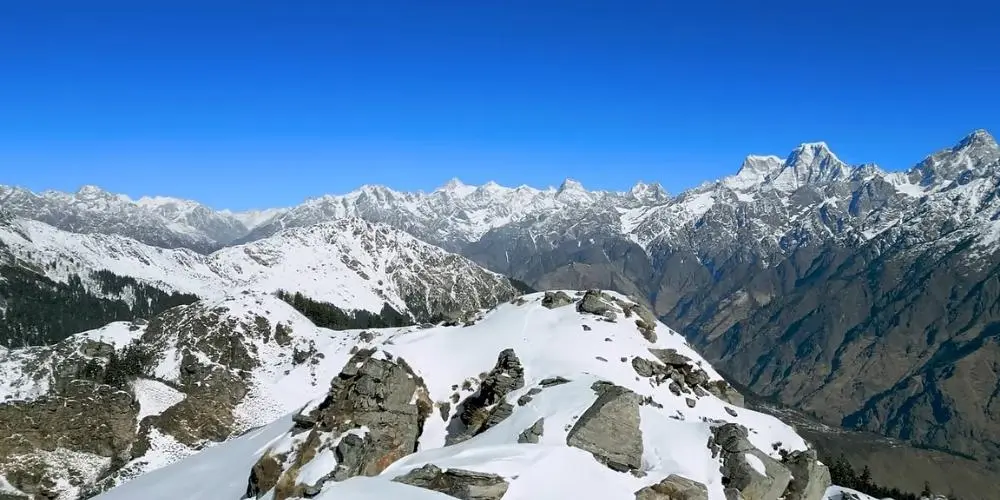
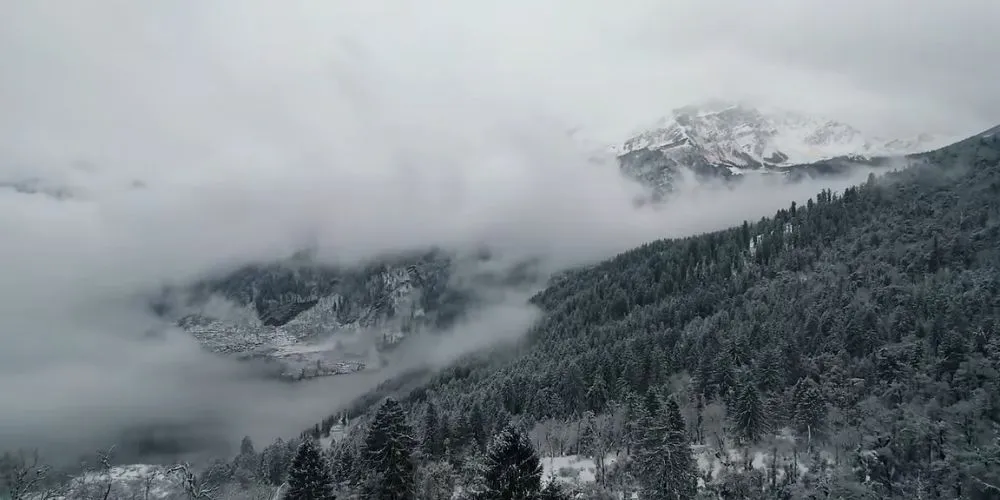
The signature highlight is the uninterrupted skyline of major Garhwal giants, Nanda Devi, Dronagiri, Hathi-Ghoda Parbat, Neelkanth, Kamet, Chaukhamba, Pangarchulla and more, seen from multiple camps and the pass itself. Forest sections are equally rewarding: you walk long under old-growth oak and rhododendron where, in spring, the trees explode in red and pink blooms against lingering snow. Above the treeline, bugyals such as Chitrakantha and Gorson turn into soft green pastures in summer and rolling white slopes in winter, giving you classic Himalayan meadow walking and, in full snow months, easy snow-traverse practice. The Auli side of the route adds sweeping views over India’s most famous ski slopes and the cable car, making the exit day visually as strong as the summit day.
Quick Facts
- Ideal trek duration: 6 days/5 nights ex-Joshimath works best for most fit beginners.
- Typical daily walking time: 4–6 hours on normal days, 7–9 hours on summit day.
- Best suited for: First-time high-altitude trekkers who want serious views without technical sections.
- Common route style: Point-to-point circuit; Dhak side approach and Auli side exit, so you rarely repeat trails.
- Usual group size: 10–20 trekkers in most organised batches, with 1 trek leader plus guides/support staff.
How to Reach Kuari Pass
By Air: The nearest airport is Jolly Grant Airport in Dehradun, about 260–270 kms from Joshimath (Kuari Pass base). From the airport, take a taxi or shared cab to Joshimath; the drive takes around 8–9 hours through Rishikesh and the Alaknanda valley.
By Rail: The nearest major railway stations are Haridwar, Rishikesh and Dehradun, all well-connected to Delhi and other big cities. From any of these stations, continue by bus, shared jeep or taxi to Joshimath, which takes roughly 8–10 hours from Rishikesh/Haridwar and slightly longer from Dehradun via Rishikesh.
By Road: From Delhi, first reach Rishikesh or Haridwar by overnight bus or cab (5–7 hours), then take a hill bus or shared taxi onwards to Joshimath (about 250–270 kms, 8–10 hours). From Dehradun or Rishikesh, regular state buses and shared jeeps run towards Joshimath via Devprayag, Srinagar, Rudraprayag and Karnaprayag; private taxis and tempo travellers are also easily available for a more flexible schedule.
How to Reach the Base Camp
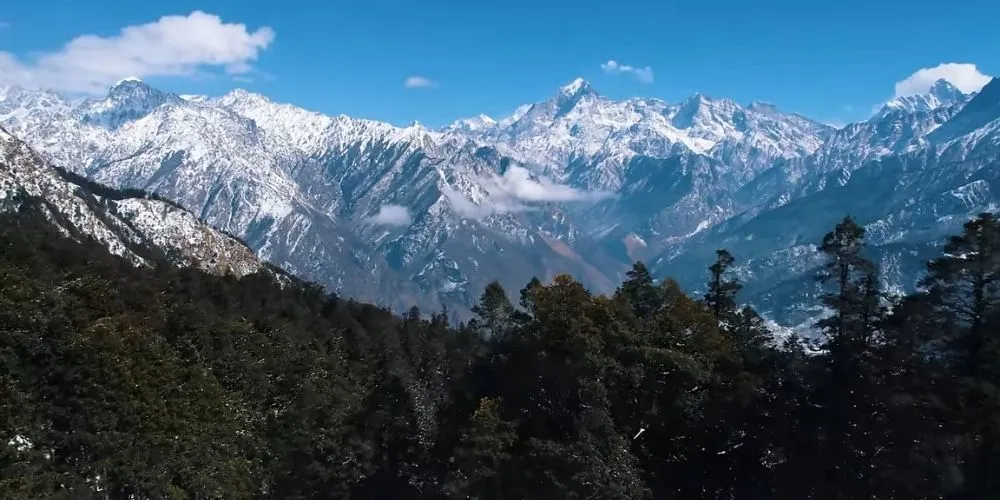
Most trekkers gather in Rishikesh or Haridwar and drive to Joshimath on Day 1 via the Rishikesh–Badrinath highway, a 270–280 kms mountain journey that takes 8–10 hours following the Alaknanda valley past Devprayag, Rudraprayag and Karnaprayag. Regular buses and shared jeeps run from Rishikesh to Joshimath, but most trekking groups use reserved tempo travellers or Sumos for timing and gear space. From Joshimath, Dhak village (or Karchi/Tapovan, depending on route variant) is reached by a short 45–90 minute drive on a narrow mountain road, and this road-head is where you actually shoulder your backpack and start walking.
Trek Route and Trail Information
From Dhak the trail climbs a dusty hillside track through Tugasi and other small hamlets, sharing stone steps with locals, mules and village children before entering mixed forest; Tugasi also gives your first reliable water source. Higher up, the path traverses into oak–rhododendron woods and then opens onto sloping pastures near Guling, where terraced
fields give way fully to grazing land. From Khullara, which sits in a bowl below a ring of peaks, the summit day route follows a long snowy or grassy ridge, then climbs a steeper shoulder to a high point often called Kuari Top, and finally drops slightly to the actual pass. The descent on the Auli side flows through Tali, Gorson Bugyal and Padiyar forest before emerging at upper Auli and then down to the road-head.
Day-wise Itinerary
Day 1: It is a long road transfer to Joshimath (around 273 kms), where you check gear, meet your trek leader and sleep in a guesthouse.
Day 2: Drive to Dhak and then walk about 4–5 kms in 3–4 hours through Tugasi and terraced fields into forest to reach Guling or a similar camp around 2,800–2,900 m.
Day 3: Trek 5–6 kms to Khullara, typically in 4–5 hours, gaining altitude gradually through denser oak and rhododendron to set up a high camp with the first big views of Dronagiri.
Day 4: Reach the summit – an 8–14 kms round trip via Kuari Pass that takes 7–9 hours including breaks, with a steep first hour, a long ridge traverse, and finally the pass itself yielding wide panoramas of Nanda Devi and the surrounding 6,000–7,000-m peaks before you loop down to Tali campsite.
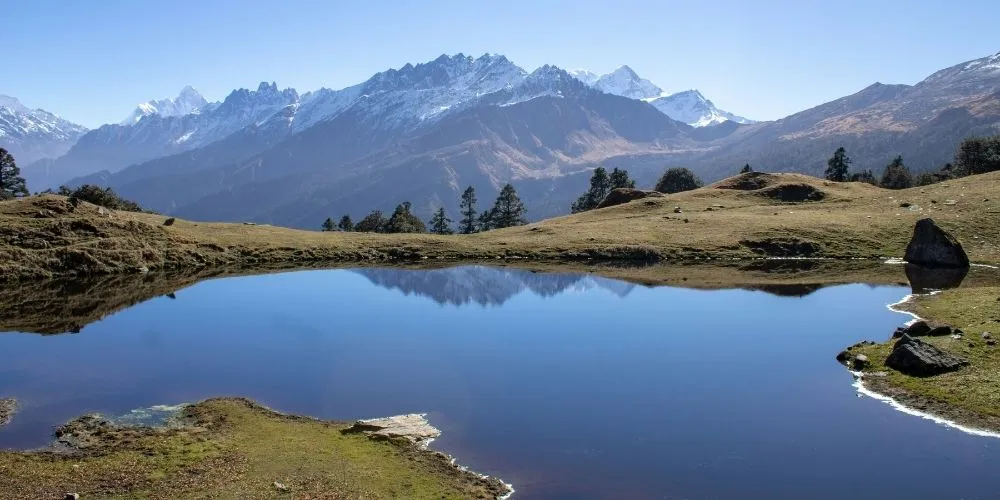
Day 5: Continue from Tali to Auli, covering roughly 8 kms in 7–8 hours, starting with a short climb to Tali lake, then an airy traverse across Gorson Bugyal and a long forest descent via Padiyar temple to the ski slopes and road-head. Depending on the operator, you either drive back to Joshimath that afternoon or stay near Auli.
Day 6: Return drive to Rishikesh/Haridwar over the same Alaknanda valley route, typically 8–9 hours, from where most trekkers connect onward to Delhi by bus, train or flight.
Best Time to Visit Kuari Pass
Winter (Dec–Feb): Full snow trek with white forests, frozen camps and sub-zero nights; continuous snow from around Khullara, great for snow-lovers but needs solid layering and microspikes.
Spring (Mar–Apr): Melting snow, blooming rhododendrons and pleasant temperatures, making it ideal for beginners who still want some snow and colour in the forests.
Summer (May–early Jun): Long, warm days, lush green meadows and mostly clear trails, perfect for families and first-timers who want comfort over extreme conditions.
Monsoon (mid–Jun–early Sep): Best avoided due to muddy, leech-prone trails and higher landslide risk on the approach roads. Heavy rains make trails muddy and leech-prone, and landslide risk increases on the Rishikesh–Joshimath road. The trek may also close temporarily during heavy downpour.
Autumn (mid–Sep–Nov): Often considered the sweet spot, with crystal-clear views of Nanda Devi, golden meadows and cool, stable weather without harsh cold.
Permits and Entry Fees
A valid forest permit and entry fee to trek legally because Kuari Pass lies inside the Nanda Devi Biosphere Reserve belt and reserve forests above Joshimath. Commercial operators almost always arrange these in advance; independent trekkers can obtain them from the Forest Department office in Joshimath after submitting ID and paying the notified camping and trail charges. Fees are usually charged per person per day, with additional charges for tents, cooks and porters, and some stretches near Auli may also levy local tourism or municipal access charges linked to the ski area.
Trekking Essentials (What to Pack)
- Prefer layered clothing over one thick jacket so you can fine-tune warmth during climbs and breaks.
- Carry at least one full set of dry “camp clothes” you never trek in, to change into immediately after reaching camp.
- Use dry bags or poly-liners inside your backpack to keep spare layers and sleeping clothes absolutely dry.
- Pack a small personal hygiene kit (wet wipes, hand sanitiser, toilet paper and altitude medicine if needed).
- Keep important items (ID, some cash, phone, lip balm, sunblock, sunglasses) in hip belt pockets or a small waist pouch for quick access.
Important Tips
- Do a basic fitness prep (brisk walking/jogging plus stair climbs) for at least 4–6 weeks before the trek.
- Eat light but frequent on trekking days; heavy, oily meals right before walking can make altitude symptoms worse.
- Follow a strict “no alcohol, no smoking” rule during the trek, as both worsen acclimatisation and dehydration.
- Learn and use simple campsite routines, fixed water-filling times, designated toilet areas, and gear checks before leaving camp.
- In strong sun, wear a cap, sunglasses and sunblock on exposed ridges to avoid snow blindness and sunburn.
Places to Visit Nearby
- Factor in at least one extra day in the itinerary if you plan to add Badrinath–Mana or spend relaxed time in Auli.
- When stopping at the river confluences (Devprayag, Rudraprayag, Karnaprayag), avoid standing too close to fast-flowing water for photos.
- In Rishikesh, keep a “buffer night” at the end of your trip, it helps if mountain roads are delayed and also lets you unwind before travelling home.
Conclusion
Kuari Pass neatly combines big-mountain views with a route that most fit beginners can handle, which is why it’s often recommended as the first “real” Himalayan pass. With its oak–rhododendron forests, sweeping bugyals, long ridgeline walks and an amphitheatre of 6,000–7,000 m peaks around Nanda Devi, it feels like a condensed showcase of Garhwal in under a week. Trekkers willing to pick the right season, respect permit rules and pack sensibly are rewarded with a safe, varied and visually spectacular journey they can grow from, whether as a one-off adventure or a stepping stone to more demanding expeditions.
By: Anushka Singhal
Also Read: Dayara Bugyal Trek: The Beginner-Friendly Himalayan Meadow Paradise