Chitrakoot is a spiritually enchanting pilgrimage destination in Madhya Pradesh, believed to be the place where Lord Rama, Goddess Sita, and Lord Lakshman spent 11 years of their 14-year exile. This ancient city, known as the “Hill of Many Wonders,” sits at the foot of the North Vindhyan Range along the banks of the sacred Mandakini River, offering devotees and travellers a perfect blend of religious significance, natural beauty, and mythological heritage. From the sacred Ram Ghat to the divine Hanuman Dhara, from the crystal rocks of Sphatik Shila to the circumambulatory path of Kamadgiri Parvat, Chitrakoot offers an unforgettable spiritual journey for every visitor.
Chitrakoot spans across the Satna and Chitrakoot districts in both Madhya Pradesh and Uttar Pradesh, making it a unique cross-state pilgrimage destination. The city is considered sacred because the three principal Hindu deities, Brahma, Vishnu, and Shiva, are believed to have taken rebirth here, making its temples and shrines particularly popular with visitors. What makes Chitrakoot special is that it’s not merely a religious site but also a place of pristine natural beauty, where ancient mythology intertwines with the lush Vindhya hills and serene river Mandakini.
How to Reach Chitrakoot
By Air: The nearest airports are Bamrauli Airport in Prayagraj (141 kms), Varanasi Airport (260 kms), and Khajuraho Airport (175 kms). These airports are well-connected with other major cities of India, making it convenient for travellers to reach Chitrakoot.
By Train: The nearest railway station is Karvi, approximately 8 kms from Chitrakoot. The second nearest railhead is Chitrakoot Dham Railway Station, approximately 12 kms away. Tourists getting down at the railway station can avail bus or taxi service to Chitrakoot town.
By Road: Chitrakoot is well-connected to major famous cities through National Highway and other roadways. It is 70 kms from Satna, 70 kms from Banda, and 88 kms from Kalinjar. Regular buses and taxis operate from nearby cities.
Must-Visit Places in and Around Chitrakoot
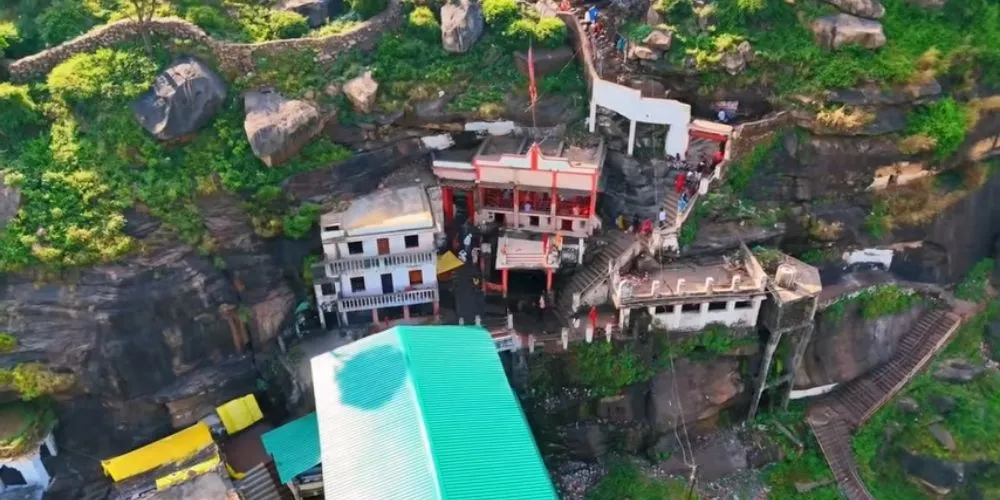
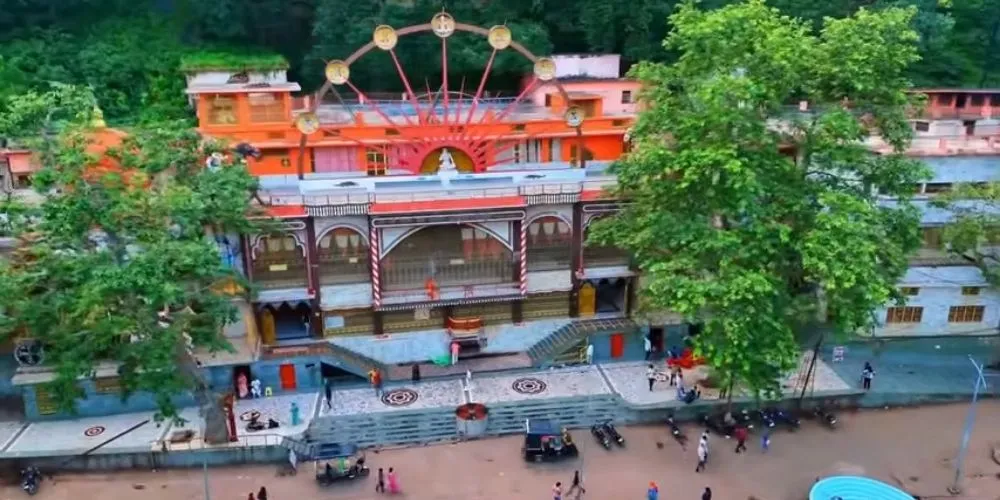
- Hanuman Dhara: It is one of the most sacred and popular temples in Chitrakoot, situated on top of a huge rock where a continuous stream of water flows, creating a natural waterfall. This temple is dedicated to Lord Hanuman and is believed to be the place where Lord Hanuman stayed after returning from Lanka with the Sanjeevani mountain. To reach the temple, devotees must climb many steep steps carved into the rock. While climbing these steps, you’ll get a spectacular view of Chitrakoot and notice many small idols of Hanuman ji along the path. According to mythology, Lord Rama stayed with Lord Hanuman inside this temple when Hanuman returned after setting fire to Lanka. The temple opens at 12:00 PM and closes at 5:00 PM.
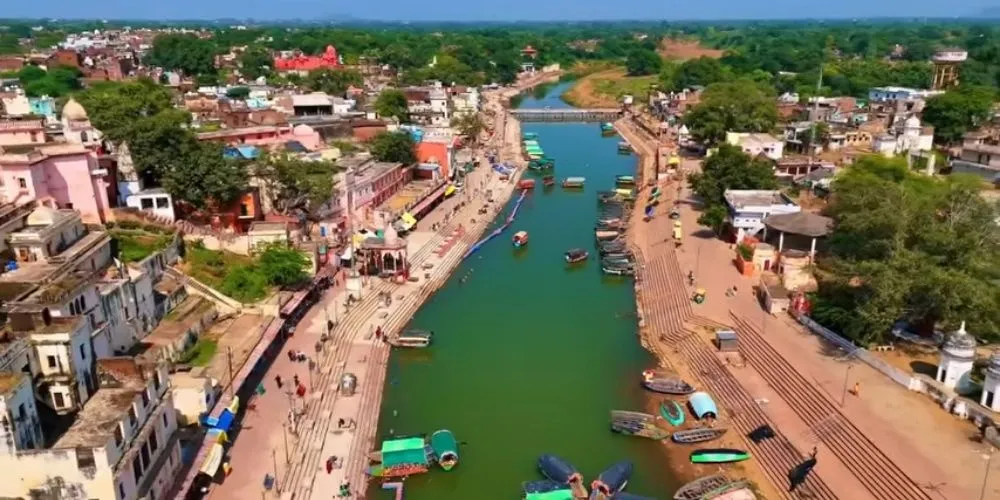
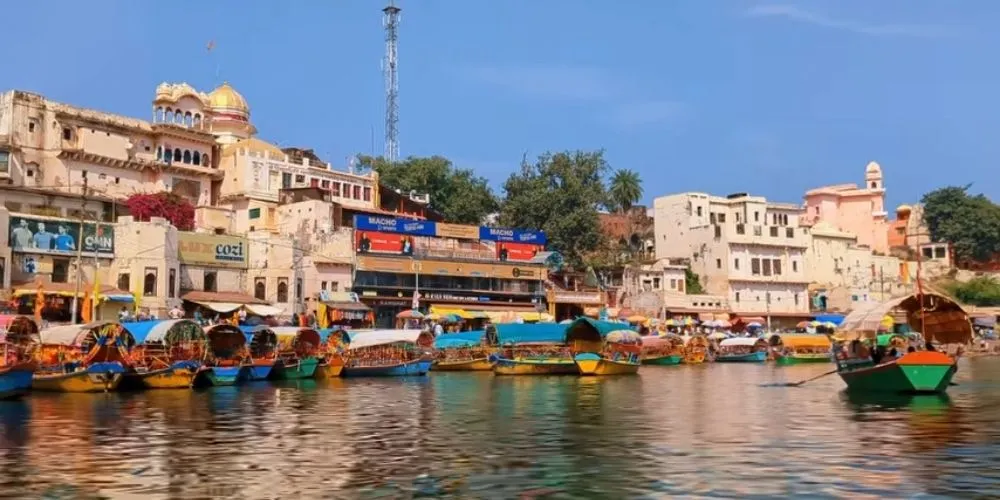
- Ram Ghat: It is the most sacred ghat in Chitrakoot, located on the banks of the Mandakini River where Lord Rama, Goddess Sita, and Lord Lakshman are believed to have taken a holy dip during their exile. This ghat is the heart of Chitrakoot’s spiritual life and serves as the main centre for religious activities and ceremonies. Devotees perform ritual baths in the sacred river here, and evening aartis are conducted with great devotion. The ghat offers beautiful views of the river and surrounding hills, especially during sunrise and sunset. Ram Ghat is also the starting point for many pilgrims’ circumambulation of Kamadgiri Parvat.
- Sphatik Shila: It literally means crystal rock; it is a sacred place with two massive rocks believed to bear the footprints of Lord Rama and Goddess Sita. This site is located amidst dense forests, close to Janki Kund on the banks of the Mandakini River. According to mythology, Lord Rama and Goddess Sita came here to unwind and soak in Chitrakoot’s natural splendour during their exile. The polished rocks clearly show the imprints, making it a deeply moving spiritual experience. Visitors can enjoy the breathtaking view of the surrounding hills and the stunning Mandakini River from this location.
- Kamadgiri Parvat: It is the main holy place of Chitrakoot Dham and is considered a physical manifestation of Lord Rama himself. The Sanskrit word “Kamadgiri” means “the hill that fulfills wishes,” and devotees believe that a parikrama of this hill helps fulfill wishes. The pilgrimage path around Kamadgiri is approximately 7 kms long and passes through numerous temples, sacred spots, and natural beauty. Devotees walk around the hill seeking divine blessings, often completing the parikrama on foot. Along the route, you’ll find the famous Bharat Milap Temple, where Prince Bharat came to meet Lord Rama and requested him to return to Ayodhya.
- Gupt Godavari Cave: They are located near Chitrakoot and are believed to be the site of secret meetings between Lord Rama and his brother. These caves contain two boulders that resemble thrones, adding to the legend of the divine brothers’ secret conversations. The caves are a fascinating natural formation that offers both spiritual significance and geological interest. The Gupt Godavari shrine is located about 5 kms from Chitrakoot town and is a popular spot for pilgrims exploring the region’s mythological heritage.
- Other Notable Attractions: Bharat Milap Temple, located near Kamadgiri, commemorates the emotional meeting between Lord Rama and his brother Bharat. Janki Kund is a peaceful spot surrounded by lush vegetation where Goddess Sita is said to have bathed, located close to Sphatik Shila. Sati Anusuya Ashram is where sage Atri, his wife Anasuya, and their three sons meditated. Kalinjar Fort, located 88 kms from Chitrakoot, is an invincible fortress-city in Banda District dating back to ancient times. Rajapur, 38 kms from Chitrakoot Dham Railway Station, is the birthplace of Goswami Tulsidas, the famous Ramayana poet. Bharat Koop, a holy well about 16 kms from Ram Ghat, is an old well regarded as sacred.
Best Time to Visit Chitrakoot
The best time to visit Chitrakoot is between July and March when the weather remains pleasant and not too hot. During these months, temperatures range from 10°C to 30°C in winter, making it perfect for sightseeing and temple visits. Winters (November to February) offer the ideal weather with cool and pleasant conditions. The temperature fluctuates between 10°C and 30°C, with balmy days and clear skies in November and December when temperatures range from 11°C to 23°C. This is the peak tourist season when you’ll experience cool breezes in mornings and evenings. Monsoon season (July to September) is also considered a good time to visit Chitrakoot, as the showers make the landscape greener and more refreshing. The temperature stays around 28°C to 35°C during monsoon, and the area receives average rainfall.
Avoid visiting during summer (March to June) when Chitrakoot sizzles with temperatures soaring up to 47°C. The extreme heat makes daytime sightseeing particularly difficult, though nights remain somewhat comfortable with minimum temperatures around 29°C.
Where to Stay in Chitrakoot
Budget travellers have several excellent options including Hotel Shivhare Palace, Hotel Parth, Hotel Ramghat Inn, Hotel Raghuveer, Hotel Nirmal, and Hotel Chitrakoot. Dharamshalas like Akhil Bharatiya Kankunj Base Dharamshala (located 2.5 km from the new bus stand) offer two and three-bedded rooms at reasonable costs. Mid-range travellers can choose from Hotel Chitrakoot Surat Dharamshala, Hotel Palimar Pejawar Mutt, Hotel Adichunchunagiri Mahasansthan Math, Hotel Yatrika Bhavan, Hotel Ramayani Kuti Bhavan,
Hotel Gayatri Shakti Peet, and Hotel Vijay Raghav Sadan, all offering appropriate services. Chitrakoot Ashram offers two-bedded AC rooms as well as two, three, and four-bedded air-cooled rooms and dormitory accommodation. Luxury travellers should note that Chitrakoot has limited luxury options. Shivhare Palace offers two and four-bed AC rooms for those seeking more comfort.
What to Do, Eat, and Shop
What to Do: Chitrakoot is best known for spiritual experiences and temple visits. Popular activities include the 7-km Kamadgiri Parikrama, attending the evening aarti at Ram Ghat, taking holy dips in the Mandakini River, exploring sacred sites, and enjoying nature walks around forests and riverbanks. Visitors can also explore nearby historical and cultural attractions such as Rajapur and Kalinjar Fort.
What to Eat: Chitrakoot is a pilgrimage destination, so most food is pure vegetarian and sattvic. Travellers can enjoy North Indian thalis, South Indian dishes, sweets, snacks, and homestyle meals at local restaurants and dhabas throughout the town.
What to Shop: Local markets around Ram Ghat and Kamadgiri are ideal for buying religious items, idols, sacred threads, prasad, devotional souvenirs, and traditional handicrafts.
Packing Essentials for Chitrakoot: Pack comfortable walking shoes for temple visits and Kamadgiri parikrama (7 kms). Carry light cotton clothes for summer months and warm clothing for winter evenings when temperatures drop to 10°C. Modest traditional attire is recommended for temple visits. Carry sufficient cash as ATMs may be limited and card payment facilities are not widely available. Bring personal medications and basic first-aid supplies. Sunscreen, sunglasses, and water bottles are essential, especially during summer and monsoon. A flashlight or torch is useful for early morning or evening temple visits.
Sample 3-Day Chitrakoot Itinerary
Day 1: Arrive in Chitrakoot by train or road, check into your hotel or dharamshala. In the afternoon visit Ram Ghat for darshan and evening aarti. Explore nearby temples. In the evening, enjoy vegetarian dinner at Panchvati Hotel or Ashok Restaurant. Stay overnight in Chitrakoot.
Day 2: Early morning starts the Kamadgiri Parikrama (7 kms circumambulation), visiting Bharat Milap Temple and other spots along the route. Afternoon visit to Hanuman Dhara (climb the steep steps, opens at 12 PM). In the evening, visit Sphatik Shila to see Rama and Sita’s footprints. Try South Indian food at Kesar Bhoj Restaurant. Stay overnight in Chitrakoot.
Day 3: Morning visit to Gupt Godavari Caves and Janki Kund. Visit Sati Anusuya Ashram. If time permits, take a day trip to Kalinjar Fort (88 kms) or Rajapur (birthplace of Tulsidas, 38 kms). Return to Chitrakoot, shop for religious souvenirs. Check out and depart for an onward journey.
Nearby Places to Explore from Chitrakoot
Kalinjar Fort (88 kms) is an invincible fortress-city in Banda District, famous for its ancient history and architecture. Rajapur (38 kms) is the birthplace of Goswami Tulsidas, the Ramayana poet, and contains his birthplace temple. Bharat Koop (16 kms) is a holy well regarded as sacred and is an important pilgrimage spot. Sati Anasuya Ashram is located nearby where sage Atri and his wife meditated. Bandhavgarh Tiger Reserve is also accessible for wildlife enthusiasts visiting the region.
Conclusion
Chitrakoot is more than just a pilgrimage destination, it is a place where spirituality, mythology, history, and nature come together to create a truly meaningful travel experience. From the sacred ghats of the Mandakini River and the revered temples to the peaceful forests, caves, and hilltop shrines, every corner of Chitrakoot is steeped in stories from the Ramayana. Whether you are undertaking the Kamadgiri Parikrama, attending the evening aarti at Ram Ghat, or simply soaking in the serene surroundings, the destination offers moments of reflection and discovery. Ideal for pilgrims, families, history enthusiasts, and nature lovers alike, Chitrakoot leaves visitors with lasting memories and a deeper connection to India’s rich spiritual and cultural heritage.
By: Anushka Singhal
Also Read: 13 Scenic Places to Visit in India in August with Family & Friends