
Prayagraj is one of those cities that does something to you. You arrive expecting a pilgrimage town, ghats, temples, devout crowds, and you leave with something harder to name. Maybe it’s the sight of two rivers merging into one at the Triveni Sangam, their waters swirling in quiet conversation. Maybe it’s standing inside Akbar’s massive fort as the evening light turns the stone warm gold. Or maybe it’s just a plate of basket chaat eaten on a busy street corner, the kind that makes you close your eyes for a second.
Whatever it is, Prayagraj gets under your skin. Formerly known as Allahabad, this ancient city on the banks of the Ganga and Yamuna is one of India’s oldest living cities, a place where mythology, Mughal history, India’s freedom struggle, and everyday life all exist in the same breath. This isn’t just a stop on a spiritual circuit. It’s a destination worth slowing down for.
How to Reach Prayagraj

Getting here is easier than most people assume.
By Air: Bamrauli Airport (IXD) handles direct flights from Delhi, Mumbai, and Bengaluru. It’s a small airport, but functional; you’ll be in the city within 20–30 minutes by cab or auto. Fares to the centre typically run ₹300–500.
By Train: This is honestly the most enjoyable way to arrive. Prayagraj Junction (PRYJ) is well-connected on most major routes. The Shatabdi Express from Delhi takes about 6 hours, overnight trains from Mumbai or Kolkata are comfortable and affordable, and waking up as the train rolls into the city along the river is its own little pleasure.
By Road: UPSRTC buses and private AC Volvos connect Prayagraj from Lucknow (around 5 hours), Varanasi (3 hours), and Delhi (about 10 hours). If you’re self-driving, the Yamuna Expressway from Delhi is smooth sailing with decent rest stops along the way.
Where to Stay
A useful rule: book somewhere in Civil Lines or near the riverfront, and you’ll be well-placed for everything.
Budget: The UPSTDC Tourist Bungalow near the fort area is a classic with river views, clean rooms, and no fuss. Dharamshalas near Raharia Ghat are a good option for pilgrims or solo travellers, keeping costs low.
Mid-range: Hotel Kanha Shyam and Grand Continental in Civil Lines are solid picks, both are 15–20 minutes from the Sangam, offer vegetarian meals, and won’t give you any surprises.
Comfort & above: Hotel Polo Star and Bloom Mansion bring AC comfort, swimming pools, and airport/site transfers to the table. During Kumbh season, book months in advance; the city fills up fast.
Places You Shouldn’t Miss
Triveni Sangam

This is the heart of everything. The point where the Ganga and Yamuna meet and where, according to belief, the invisible Saraswati joins them is called the Triveni Sangam, and it’s as moving in person as any description of it suggests.
Hire a rowboat (₹200–300 for a 30-minute ride) and drift out to where the waters change colour, one river dark and fast, the other lighter and slower. At dusk, watch the evening Aarti from the boat, or float a clay diya and watch the flame carry itself away downstream.
Akbar Fort (Allahabad Fort)
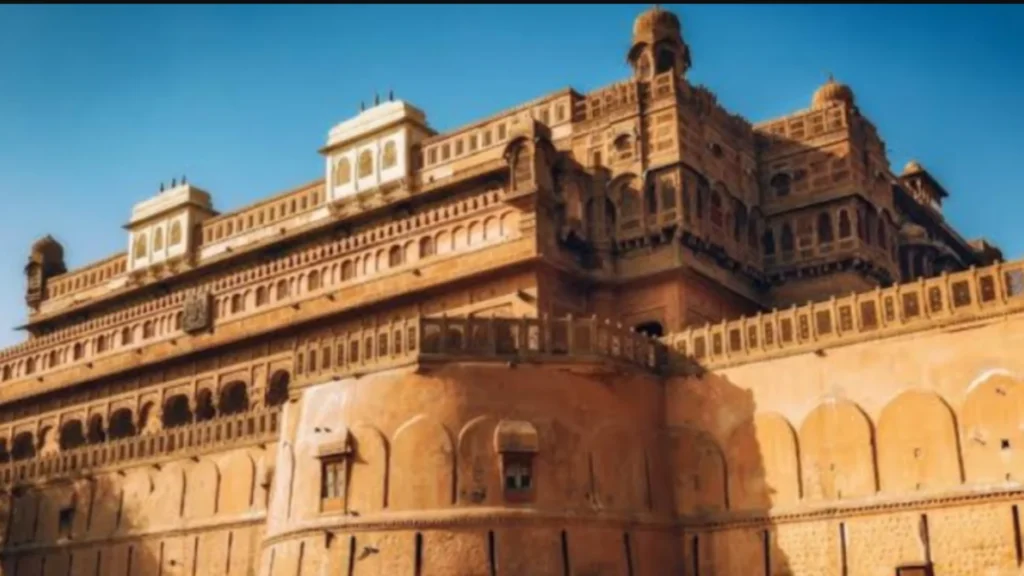
Built in 1583 under Emperor Akbar, this is one of the finest Mughal forts in northern India and one of the most underappreciated. Inside you’ll find the famous Ashoka Pillar inscribed with edicts from the 3rd century BCE, the Patalpuri Temple, an underground shrine that pilgrims descend into by lamplight, and long corridors where the air feels noticeably cooler and older.
Climb the ramparts for a sweeping view of the river confluence. Entry is partially restricted (it’s an active military base), but the accessible sections are well worth the visit.
Anand Bhavan
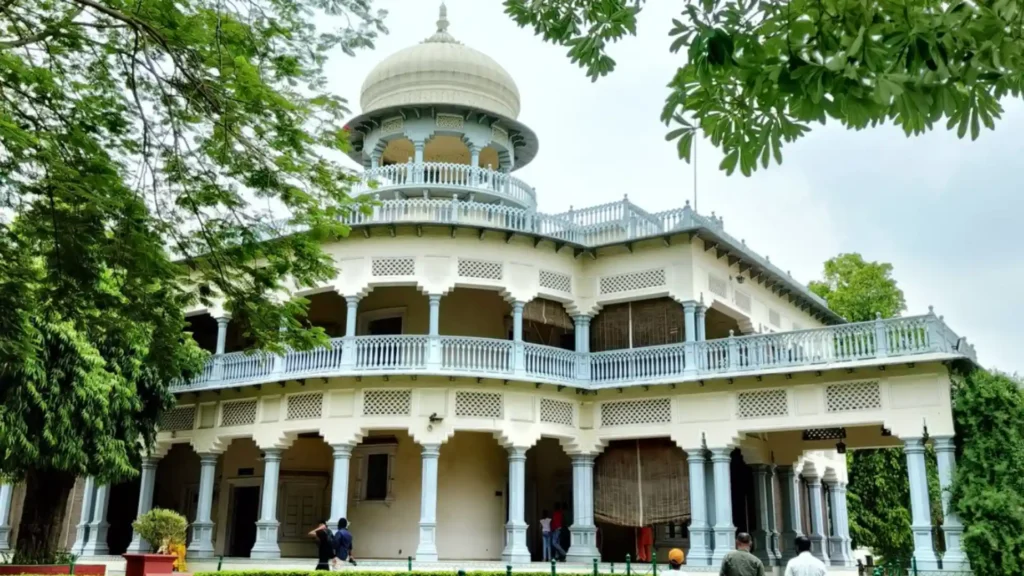
The ancestral home of the Nehru family is now a museum, and it’s a quietly fascinating one. Walking through the rooms where Jawaharlal Nehru grew up, where Indira Gandhi spent her formative years, and where meetings of the Indian National Congress were held during the freedom struggle it gives history a texture that no textbook does. The planetarium next door is a bonus if you’re visiting with kids.
Khusro Bagh
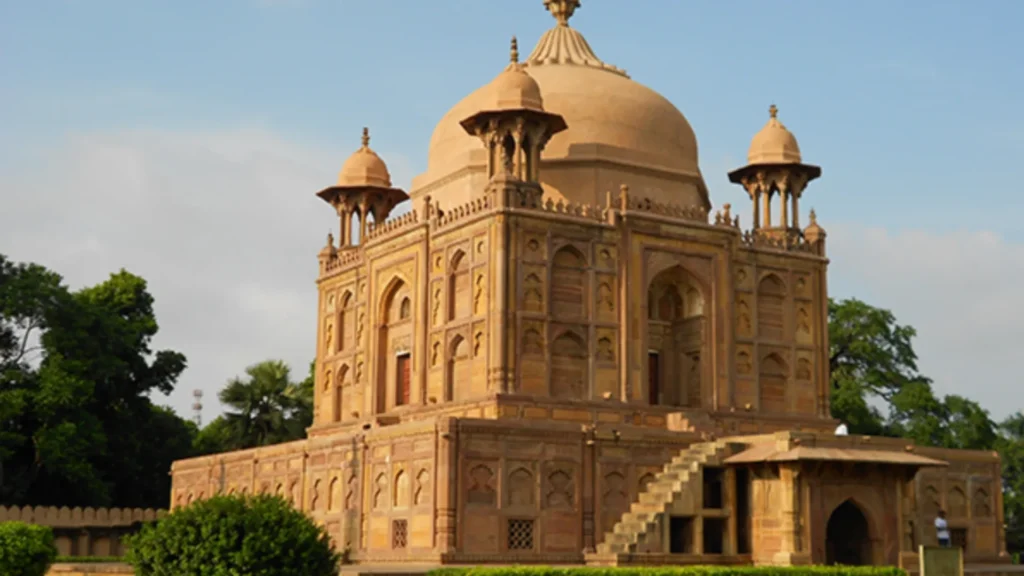
A somewhat overlooked gem. This Mughal Garden complex holds the sandstone tombs of Prince Khusrau Jahangir’s eldest son, along with those of his mother and sister. The craftsmanship is exquisite, the gardens are quiet and tree-lined, and on a weekday morning, you might have the place nearly to yourself. It’s the kind of stop that makes you glad you went beyond the main sites.
Allahabad Museum
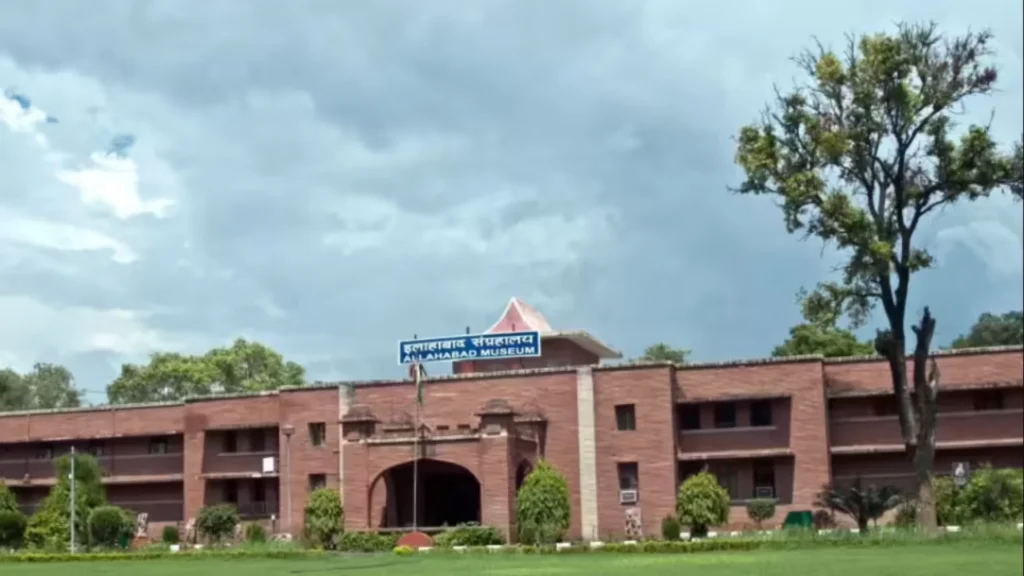
One of India’s better regional museums, with a collection that spans ancient terracotta from the Harappan period, Chola bronzes, Buddha sculptures, and a section dedicated to the freedom movement. Give yourself at least two hours if history is your thing.
Bade Hanuman Temple
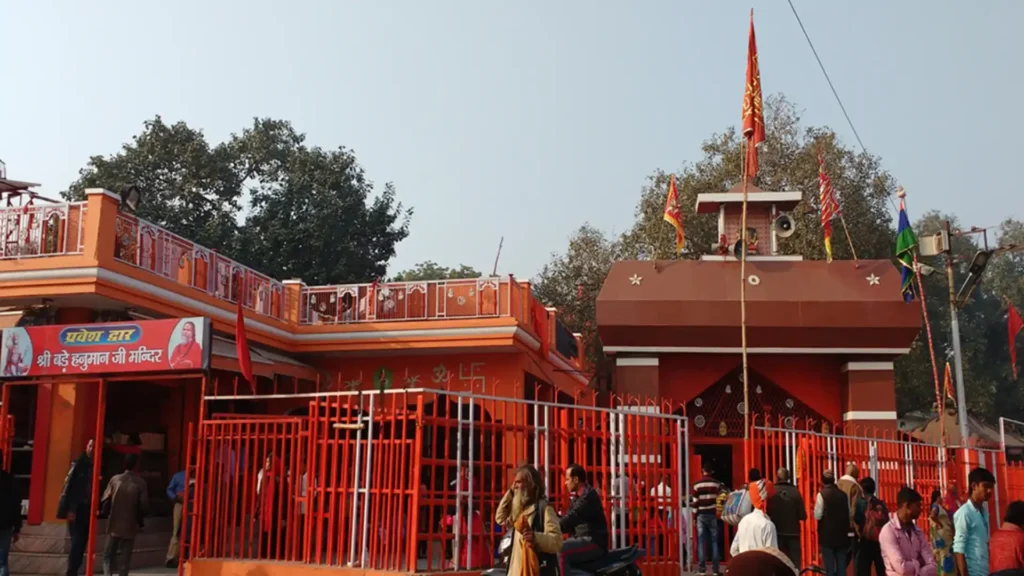
Unusual and memorable: this is one of the rare temples in India where Lord Hanuman is depicted reclining rather than standing. The idol is partially submerged in the ground, and according to local belief, it sinks a little deeper each year. It sits right next to the Sangam and is worth a visit before or after your boat ride.
Things to Do Beyond the Temples
Prayagraj rewards wandering. Some ideas:
Coracle ride on the Yamuna — a round wicker boat that spins gently as it drifts, used by fishermen for centuries. Disorienting and delightful.
Morning yoga at the ghats — several instructors hold open sessions at sunrise. Sitting cross-legged on a ghat as the river catches the first light is the kind of thing you remember.
Cycle rickshaw tour of Civil Lines — this old British-era neighbourhood has wide tree-lined roads, colonial bungalows, and a pace that feels genuinely unhurried. A rickshaw ride through it, stopping for chai and taking in the architecture, is a perfect half-morning.
Shopping at Chowk — brass lamps, Banarasi silk, attar (traditional perfume), and handwoven dupattas. Don’t rush it. Bargain respectfully, stop for street food, and let yourself get a little lost.
Alfred Park (Chandrashekhar Azad Park) — a large, leafy park where freedom fighter Chandrashekhar Azad made his last stand in 1931. There’s a statue marking the spot. It’s peaceful now, as historically significant places often are.
Famous Food To Try in Prayagraj

Prayagraj’s food scene is proudly vegetarian and deeply local. A few things you must try:
Basket chaat at Hari Ram near the fort — this is the city’s signature dish. A crispy fried dough basket filled with tangy potato, yoghurt, tamarind, and chutneys. It’s chaotic and delicious.
Tamatar chaat — a Prayagraj specialty that sounds simple (tomato-based chaat) but is layered, spiced, and completely addictive.
Bedmi puri for breakfast — a thick, spiced puri eaten with aloo sabzi. Order it at any old-school dhaba, and you’ll start every future morning wanting one.
Peda from Kalyan Mal — this sweet shop has been around since the time of the Mughal court. Their peda (a milk-based sweet) is the kind of thing locals carry home as gifts. Buy some.
Lassi, jalebi, and thandai at the ghats — the holy trinity of street drinks in this part of India. The thandai in particular, a spiced milk drink, is something special in winter.
Getting Around
The city is manageable once you understand its geography. The old town, the Sangam area, and Civil Lines are the three zones you’ll move between most.
E-rickshaws and autos handle short hops for ₹20–50. Uber and Ola are reliable for longer distances. Cycle rickshaws are perfect for the ghats — slow enough to actually see things. If you’re heading to outskirt areas like Phaphamau Ghat or Kaushambi, hire a cab for the day rather than piecing together transport.
Walking around Civil Lines is genuinely enjoyable — the streets are wide, the shade is good, and every few minutes you stumble on something worth photographing.
Off the Beaten Path
Phaphamau Ghat — quieter than the main ghats, fewer crowds, and the river feels more contemplative here. Worth the short trip if you want some space.
Mankameshwar Temple — an ancient Shiva temple with underground passages that locals treat as deeply auspicious. Less visited than the main sites, and all the better for it.
Kaushambi (60 km) — one of the most important Buddhist and Jain pilgrimage sites in India, with ancient stupas and ruins from a city that was already old when the Buddha passed through it. A half-day trip.
Sasaram (Bihar, ~120 km) — Sher Shah Suri’s magnificent tomb sits in the middle of a lake here. If you’re heading east, it’s a detour worth making.
A 3-Day Itinerary for Prayagraj
Day 1 — Arrive, Find the River, Check in, head straight to the Triveni Sangam for a late-afternoon boat ride. Watch the evening aarti. Walk to the Bade Hanuman Temple. End the day with a chaat crawl near the fort.
Day 2 — History and Culture Morning at Akbar Fort (go early before the heat). Lunch in Civil Lines. Afternoon at the Allahabad Museum, then Khusro Bagh before sunset. Evening stroll at Anand Bhavan, followed by peda from Kalyan Mal and a lassi at the ghats.
Day 3 — Slow Down and Explore: Morning yoga or a coracle ride on the Yamuna. Cycle rickshaw through Civil Lines. Shopping at Chowk for silk and brass. Late afternoon: optional drive to Kaushambi, or use the time to simply sit by the river. Optional onward trip to Varanasi (3 hours) to continue the spiritual circuit.
Final Word
Prayagraj isn’t a city you tick off a list. It’s one you return to sometimes physically, sometimes just in memory, during a busy week when you find yourself thinking about mist on the Sangam at six in the morning, or the sound of a diya lamp floating downstream until you can’t see it anymore.
Come for the Kumbh, stay for the chaat, leave with something you can’t quite explain. That’s Prayagraj.