
Har Ki Dun Trek is a cradle-shaped hanging valley in the Garhwal Himalayas of Uttarakhand, India, known as the “Valley of Gods” and believed to be one of the oldest trekking routes once used by the Pandavas on their journey to heaven. The trek is a long trail that passes through picturesque villages, sprawling meadows, and pine forests, with stunning views of the majestic Swarga Rohini peak, reaching an altitude of 3,535-3,566 metres (11,600-11,700 ft) at its highest point.
Trek Details
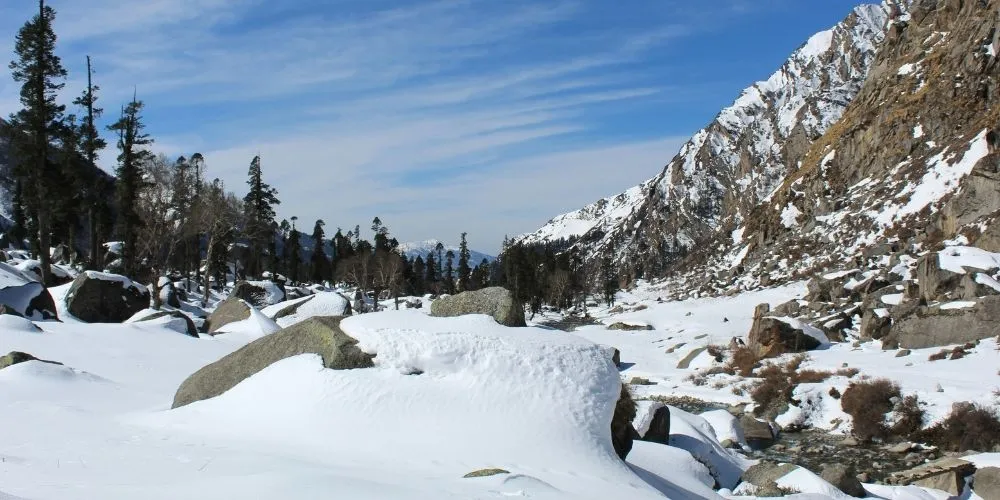
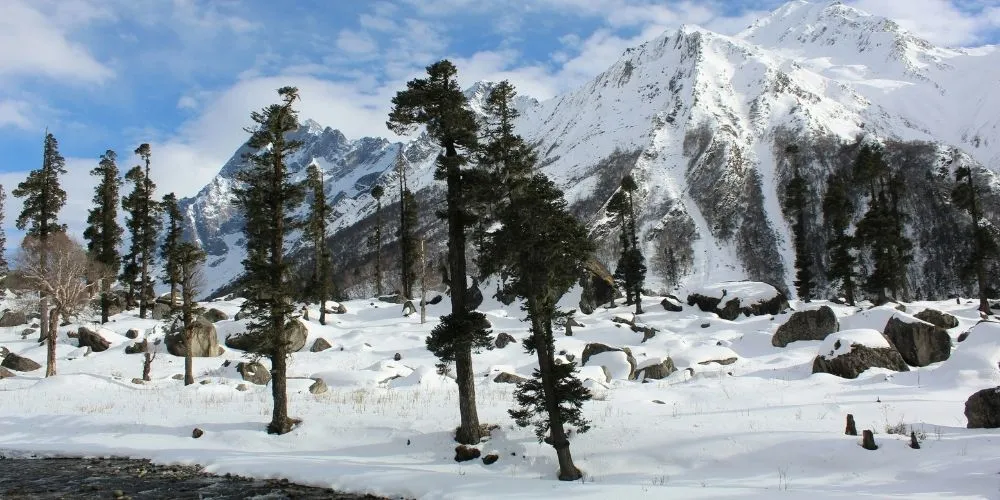
The Har Ki Dun valley is surrounded by green Bugyals (high-altitude meadows) and snow-covered peaks with alpine vegetation. The region is connected to Baspa Valley by the Borasu Pass. The valley sits at 3,566 metres (11,700 fi) above mean sea level and is snow-covered from October to March. In the final village along the trek, there stands a temple dedicated to Lord Shiva. The trail length is 40-50 kms total, and the highest point is Har Ki Dun valley at approximately 3,500 metres or 11,500 feet.
Trek Distance, Duration, and Altitude
The total trek distance is 40-50 kms round trip. The summit day covers 9 kms from Kalkatiyadhar to Har Ki Dun, and the same distance returns to Kalkatiyadhar. Daily walking distances range from 6-12 kms per day.
The trek duration is 6-9 days from Sankri for a complete round-trip, depending on your pace and acclimatization needs. The summit day itself takes 5 hours to reach Har Ki Dun and 5 hours to return.
The trek starts at Sankri village at 1,900 metres (6,455 ft). The highest point is Har Ki Dun valley at 3,535-3,566 metres (11,600-11,700 ft). All trekkers report here on the first day before driving to Taluka for the actual trek start. On alternative routes, the maximum altitude reaches 11,850 fi at Ruinsara Valley on day 6, via Har Ki Dun at 11,700 ft on day 4.
Har Ki Dun Trek Difficulty
Har Ki Dun is classified as a moderate trek on level 3-4 on the Bikat Rating Scale, with long walking days but no technical climbing. The trek begins at Sankri village at an altitude of 1,900 metres, and all trekkers report here on the first day. On the second day, trekkers drive to the rustic village of Taluka where the trekking trail starts, winding gently along the right-hand side of the Supin River. You will be trekking a minimum of 10 kms every day, taking anywhere between 5-7 hours to cover the distance depending on the terrain. On the Har Ki Dun trail, it takes 9 kms and 5 hours to reach the summit, and the same distance and time to return to your campsite at Kalkattiyadhaar.
Itinerary for Trek
Six-Day Standard Itinerary
Day 1: Drive from Dehradun to Sankri – Start your journey from Dehradun and drive to Sankri village, the base camp. This is your first reporting point at 1,900 metres altitude where you rest and prepare for the trek.
Day 2: Drive from Sankri to Taluka, Trek to Gangaad – Drive from Sankri to Taluka, the last street point of the trek. Begin the trek from Taluka to Gangaad, covering approximately 12 kms along the Supin River.
Day 3: Trek from Gangaad to Kalkatiyadhar – Continue trekking from Gangaad to Kalkatiyadhar, gaining altitude gradually through picturesque villages and pine forests.
Day 4: Trek from Kalkatiyadhar to Boslo via Har Ki Dun – This is the summit day. Trek from Kalkatiyadhar to Boslo via Har Ki Dun valley, covering 9 kms in approximately 5 hours to reach the summit at 3,566 metres.
Day 5: Trek from Boslo to Swarnadhara – Begin your descent by trekking from Boslo to Swarnadhara, passing through the valley.
Day 6: Trek from Swarnadhara to Devsu Thatch via Ruinsara Valley – Complete your journey by trekking from Swarnadhara to Devsu Thatch via Ruinsara Valley, then return to Sankri for the final drive back to Dehradun. Expected typical itineraries take 6-9 days from Sankri for a round-trip, depending on pace, acclimatization, and any side excursions. Expect daily walking distances of 6-12 kms with gradual elevation gain.
Trek Route Map and Trail Information Main Route: The main route follows: Sankri → Taluka → Seema/Osla → Kalkati Dhar → Har Ki Dun → Maninda Lake → Kalkati Dhar → Seema/Osla → Taluka → Sankri.
Alternative Route
Route 1: Dehradun → Mussoorie → Nainbagh → Lakhamandal → Naugaon → Purola → Mori → Netwar → Sankri Village
Route 2: Dehradun → Dakpathar → Nainbagh → Lakhamandal → Naugaon → Purola → Mori → Netwar → Sankri Village
Purola has the last ATM point before Sankri basecamp. The trekking trail starts from Taluka, winding gently along the right-hand side of the Supin River for the first 12 kms.
Trekking Essentials
Carry warm clothes for the cold nights, tight trekking shoes with good grip for the trail, and a good quality raincoat or poncho as mountain weather changes quickly. Pack quick-dry trekking pants, thermal innerwear, fleece jacket, and padded or down jacket for higher altitudes. Bring three to four pairs of dry-fit t-shirts, two pairs of dry-fit pants, windproof or windcheater, three to four pairs of cotton socks, sun hat, and sunglasses.
Essential gear includes a 30-40 litre backpack, 15-20 L summit bag for day treks, walking stick available at local villages starting at Rs 50, 1 L water bottle, and waterproof bag covers. Pack food and energy bars for snacking as food stalls are limited. Carry personal utilities and toiletries including towel, soap, toothbrush, toothpaste, sunscreen SPF 30 or more, moisturizers, and sandals or flip-flops.
Bring basic medicines and first aid including bandages, antiseptic, pain relievers, ORS, and Diamox for altitude concerns. Carry photo ID needed for accommodation check-ins and permits, Ziploc bags for electronics waterproofing, camera, and cash as the last ATM is at Purola. Avoid heavy backpacks, plastic water bottles, Volini sprays, deodorants, and littering. Do not pluck flowers or uproot plants as many species are protected.
How to Reach Har Ki Dun
The nearest major city is Dehradun, from where you drive to Sankri. The route passes through Mussoorie, Nainbagh, Lakhamandal, Naugaon, Purola, Mori, and Netwar before reaching Sankri Village. The drive from Dehradun to Sankri takes approximately 10-12 hours. From Sankri, drive to Taluka where the trekking trail officially starts. Taluka is the last street point of the trek. The route from Sankri to Taluka is approximately 38 kms.
Best Season to Visit: The best seasons for Har Ki Dun trek are March to June for snow and September to November for clear weather. The valley is snow-covered from October to March, making winter trekking challenging. Mid-September to mid-December is also recommended with stable weather conditions.
Places to Visit Nearby Trek
- Ruinsara Valley: A side excursion on day 6 of the alternative route, reaching 11,850 fi with stunning alpine meadows and glacial lakes.
- Maninda Lake: Located near Har Ki Dun, accessible on the summit day route.
- Swarga Rohini Peak: The majestic peak visible throughout the trek with stunning views from the valley.
- Borasu Pass: Connects Har Ki Dun to Baspa Valley, though this is an advanced trek extension.
- Sankri Village: The base camp village with local culture and accommodation options.
- Purola: The town with the last ATM before Sankri, useful for cash and supplies.
Permissions Required for Har Ki Dun Trek
Forest permissions and entry permits are required for Har Ki Dun as it passes through protected areas. These permits help regulate footfall and are typically arranged through trek operators. A trekking medical certificate is compulsory at reporting time with 30 days validity, duly signed by a registered medical practitioner (MBBS). If you visit religious sites along the route, behave appropriately and respect local customs.
Survival Hacks
- Carry a raincoat or poncho as mountain weather changes quickly.
- Start early (around 7:00 AM) to avoid afternoon weather changes and maximise daylight.
- Pack light and keep your backpack to 30–40 litres.
- Use a walking stick for steep descents and better stability.
- Carry energy bars, dry fruits, and enough water; use a reusable bottle to reduce plastic waste.
- Ascend gradually and stay hydrated to minimise the risk of Acute Mountain Sickness (AMS), especially above 3,500 metres.
- Store phones, batteries, and documents in Ziploc bags for waterproofing.
- Do not litter or disturb the natural environment; practise responsible trekking.Carry sufficient cash, as the last reliable ATM is at Purola before Sankri.
- Download offline maps and inform families about patchy connectivity; BSNL and Jio work intermittently along the route.
- The nearest medical facilities are in Purola and Sankri, so keep emergency plans in mind.
Additional Important Points
What makes Har Ki Dun special is its mythical significance as the route the Pandavas used to reach heaven, combined with the stunning cradle-shaped hanging valley surrounded by green Bugyals and snow-covered peaks. The trek offers a perfect blend of culture, mythology, and natural beauty without technical difficulty.
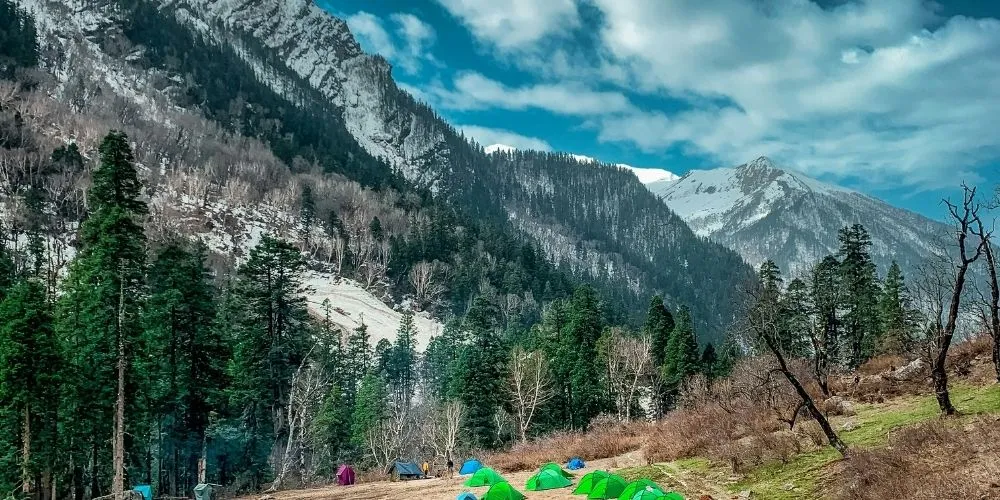
Camping is not allowed inside the valley, and all visitors must stay at designated campsites at Kalkatiyadhar and other villages along the route. The trek is suitable for nature lovers, first-time trekkers, families with children above 8 years, and photographers.
Booking with trek operators is recommended for permit arrangements and guide services. Operators offer packages ranging from Rs 12,000-20,000 per person for 6-7 days including accommodation, meals, guide, and permits. Mules and porters are available for hire at Taluka for Rs 500-800 for backpacks and Rs 800-1,200 for mules.
Conclusion
Har Ki Dun Trek offers the perfect introduction to high-altitude Himalayan trekking with its moderate difficulty, cultural significance, and breathtaking natural beauty. The valley’s mythical connection to the Pandavas combined with panoramic views of Swarga Rohini peak and surrounding Bugyals makes this an unforgettable journey through the Garhwal Himalayas.
By: Anushka Singhal