Kedarkantha Trek stands at 3,810 metres (12,500 ft) in Uttarakhand’s Govind Wildlife Sanctuary, offering India’s most reliable snow trekking experience with 360° views of Swargarohini, Bandarpoonch, Black Peak, and Ranglana peaks. This easy-to-moderate winter trek spans 20 kms over 4-5 days, perfect for first-timers without prior trekking experience, featuring snow-covered pine forests, frozen lakes like Juda Ka Talab, and peaceful Himalayan villages.
Kedarkantha Trek Details and Difficulty
Kedarkantha is rated Easy-Moderate (Level 2) on trek difficulty scales. You start at 6,500 ft and climb to 12,000 ft within three days, gaining altitude every day. The trek involves quite a few climbs but remains accessible for fit beginners. The hardest parts show up during the summit climb with icy morning walks and long snow patches testing your balance. January snow feels very different from late December trails, so your chosen month changes the whole trek mood. With 4-6 kms daily climbs, it’s suitable for first-timers with basic fitness. The valley offers surreal sunrise views from the summit and camping under starlit skies in snow-covered meadows. You’ll trek through enchanting pine and oak forests, encounter knee-deep snow on winter trails, and meet fellow adventure enthusiasts. The summit climb is adventurous yet doable for beginners, making it an ideal high-altitude introduction.
How to Reach
By Air: The nearest airport is Jolly Grant Airport in Dehradun, 250 kms from Sankri. Daily flights operate from Delhi and Chandigarh. From the airport, take local transport to Prince Chowk, Dehradun (30 kms, 1-hour drive).
By Train: Take an overnight train from Delhi to Dehradun. The nearest railway stations are Dehradun and Haridwar, well-connected to Delhi and major cities. From railway station to Prince Chowk, Dehradun is 6 kms (15 minutes without traffic). There on hire a taxi to take a bus.
By Road: Sankri is well connected by road via Dehradun. The drive from Delhi is around 430 kms (10–12 hrs), while Chandigarh is about 300 kms (7–8 hrs) away. From Dehradun, the journey to Sankri is 197 kms (9–10 hrs) via Mussoorie–Barkot–Purola–Netwar. You can drive your own vehicle, hire a private taxi (Bolero/Max), or take the only direct bus that departs
from Dehradun at 5:30 AM, reaching Sankri by 4:00–4:30 PM. Shared jeeps are also available via Dehradun–Mussoorie–Naugaon–Purola–Sankri, though you’ll need to change vehicles at least three times.
Trek Route Map, Altitude, Distance, and Duration
The main route follows: Dehradun → Mussoorie → Naitwar → Mori → Purola → Sankri → Juda Ka Talab → Kedarkantha Base → Summit → Hargaon → Sankri → Dehradun.
The trek starts at Sankri village at 1,950 metres (6,400 ft). Juda Ka Talab sits at 2,773 metres (9,100 ft). Kedarkantha Base Camp is at 3,413 metres (10,100 ft). The summit reaches 3,810 metres (12,500 ft). Hargaon campsite is at 2,700 metres (8,800 ft).
Daily walking distances range from 4-9 kms per day. The summit day covers 9 kms from Base Camp to the summit and back, then to Hargaon. The trek duration is 4-5 days from Sankri for a complete round-trip, depending on pace and acclimatization needs.
Itinerary for Trek
Five-Day Standard Itinerary
Day 1: Dehradun to Sankri (1,950 m)
Depart at 6:30 AM from Dehradun and drive 197 kms via Mussoorie, Purola, Mori, and Naitwar. The scenic route unfolds through Mussoorie’s hills, Kempty Falls, and alongside the Yamuna River. The final 22 kms traverses Govind National Park with rough yet rewarding terrain. Reach Sankri by evening at 6,400 fi with Mt. Swargarohini vistas are visible. Overnight stay in a guesthouse.
Day 2: Sankri to Juda Ka Talab (2,773 m)
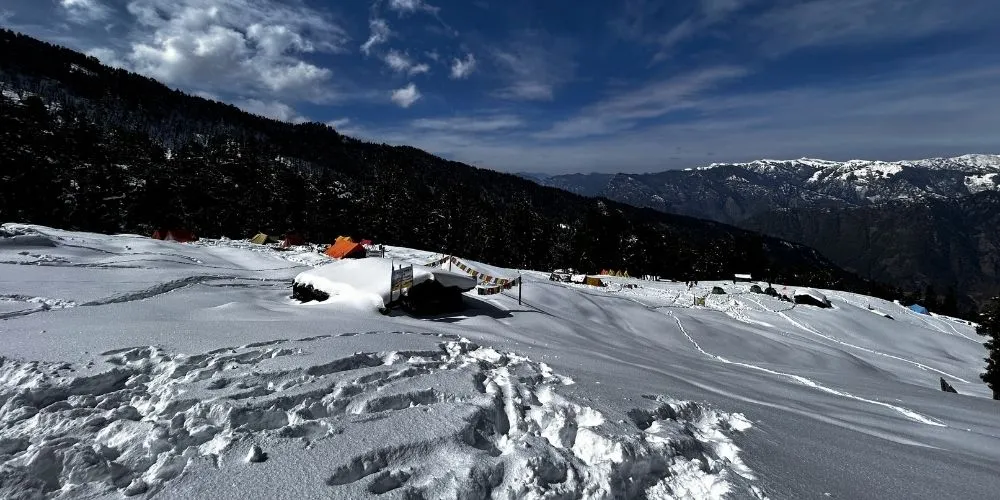
Trek 4 kms for 5 hours starting at 9 AM through Saud village and dense pine/maple forests. The trail crosses bridges, offers maple-carpeted forest views, and follows soothing stream sounds. In winter, the trail transforms into a magical snow-covered wonderland. After traversing Oak-brown forests, reach the campsite at Juda Ka Talab, a serene high-altitude lake surrounded by emerald-green Oak and Pine forests. Enjoy packed lunches and tea in meadow clearing. Camp overnight.
Day 3: Juda Ka Talab to Kedarkantha Base Camp (3,413 m)
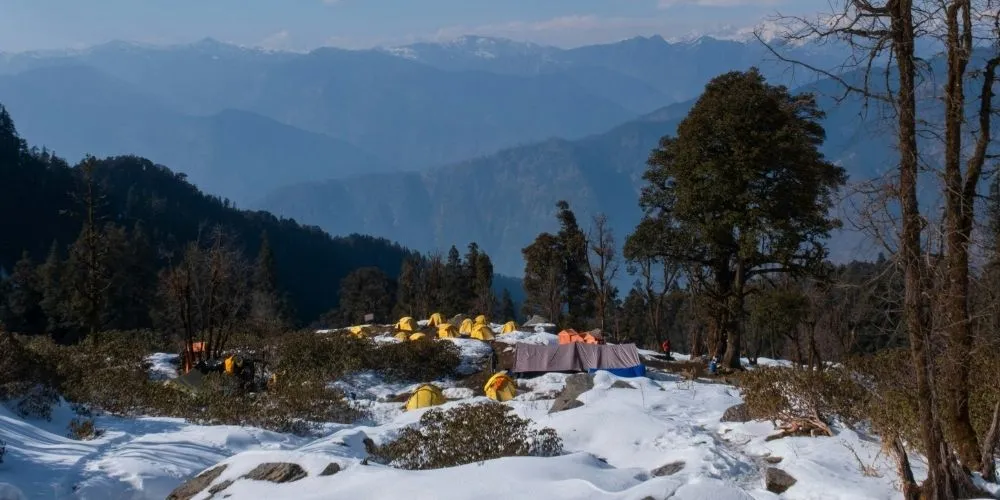
Begin at 9 AM for a 3-hour trek covering 4 kms through dense oak forests. The steeper gradient takes you through the forest where Kedarkantha summit peaks through the trees. In late winter, encounter snow-covered trails and budding rhododendrons. April reveals vibrant blooms and awakening grasslands. The base camp offers panoramic views of snow-clad peaks including Kedarkantha itself. Prepare for early dinner and rest as summit trek begins at 3 AM. Camp overnight.
Day 4: Kedarkantha Base Camp to Summit (3,810 m) and back to Hargaon (2,700 m)
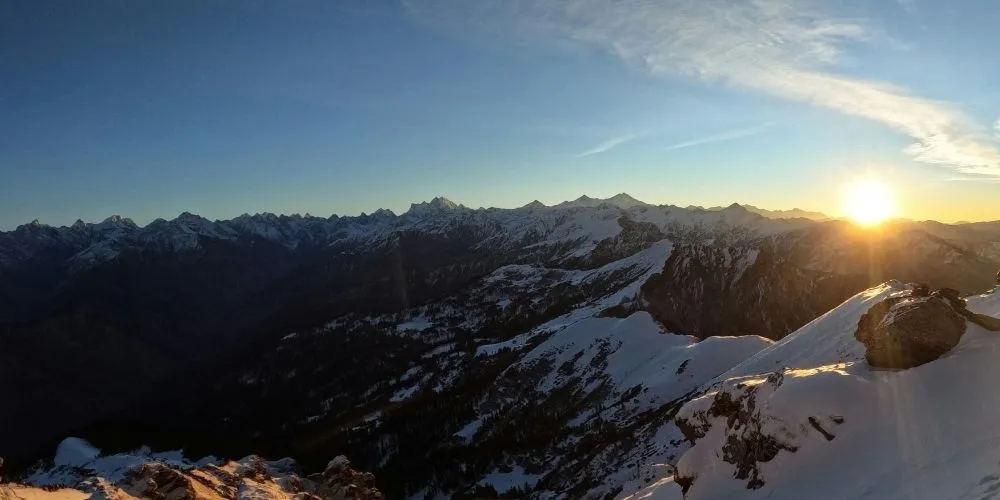
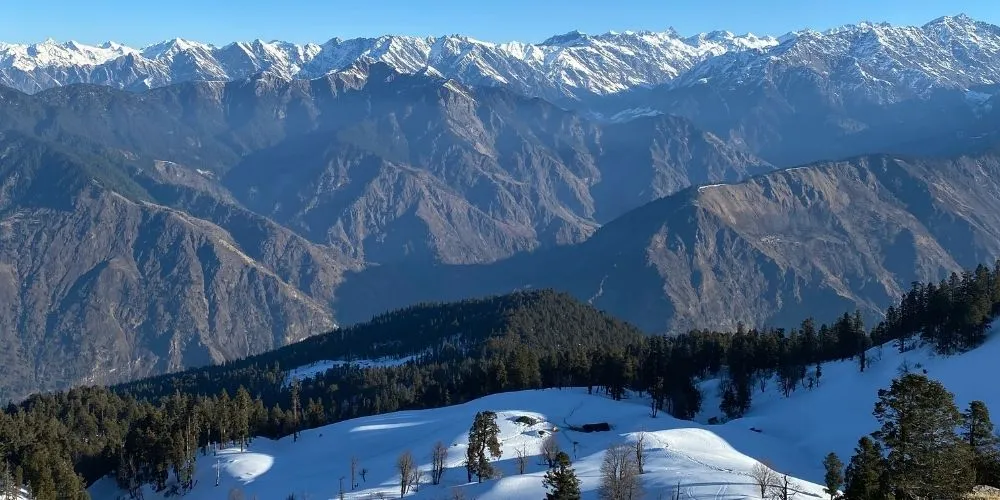
Start at 3 AM for a 9 kms summit trek to witness the sunrise. Endure cold temperatures and icy winds. The initial easy trail through Oak forests transitions to steep, snow-covered ascent. Reaching the surreal summit, enjoy 360-degree views of Gangotri, Swargarohini, and Black Peak. Descend to base camp by noon, have lunch, and proceed to Hargaon, an open grassland at 2,700 m. Set up camps for a night under star-lit skies.
Day 5: Hargaon to Sankri and Departure
Trek 6 kms for 3-4 hours to Sankri on a rocky yet well-paved trail offering scenic views of Har Ki Dun Valley and steady streams. After a brief stop in Sankri, commence the 197 kms journey to Dehradun taking 9-10 hours. Reach Dehradun by 8-9 PM. Book Volvos departing 11 PM-12 AM for Delhi if needed.
Four-Day Shortened Itinerary: Combine Day 5 descent by returning to Sankri on summit day instead of Hargaon.
Trekking Essentials
- Clothing: Thermals, fleece, padded/down jacket, quick-dry T-shirts and trekking pants, windcheater, socks, sun hat, and sunglasses.
- Footwear & Rain Gear: Waterproof ankle-high trekking shoes, raincoat/poncho, and a backpack rain cover.
- Backpack & Gear: 30–40 L backpack, 15–20 L daypack, walking stick, 1 L reusable water bottle, and headlamp/torch.
- Food: Carry energy bars, dry fruits, and snacks, as food options on the trail are limited.
- Toiletries & First Aid: Sunscreen (SPF 30+), moisturizer, basic toiletries, sandals, and a first-aid kit with ORS, pain relievers, antiseptic, bandages, and altitude medication if required.
- Documents & Miscellaneous: Photo ID, sufficient cash, camera, and Ziploc bags to waterproof electronics.
- Avoid: Heavy backpacks, single-use plastic bottles, littering, deodorant sprays, and plucking flowers or disturbing the local ecosystem.
Best Season to Visit Kedarkantha Trek
The best time for the Kedarkantha Trek is December to March, when snow-covered forests and white trails create a magical winter landscape. Temperatures range from -5°C to 10°C, with January receiving the deepest snowfall and February offering excellent snow with slightly milder weather. March and April bring blooming rhododendrons, green meadows, and pleasant temperatures of 10°C–20°C, while May to June offers clear skies with little snow. September to November is ideal for crisp mountain views and stable weather. Avoid July and August due to heavy monsoon rains, slippery trails, and landslide risks.
Pro Tip: The trek is best done in winters (Mid December-January) when the peak (3800 m) is fully covered in snow.
Places to Visit Nearby Trek
- Tapovan Village: Sacred ashram of Swami Tapovan, 3 kms from Sankri, offering spiritual significance and meditation.
- Pulin: Scenic village near Sankri with beautiful landscapes.
- Har Ki Dun Valley: Visible from the final descent trail, offering stunning views of the valley.
- Juda Ka Talab: The frozen high-altitude lake, surrounded by emerald-green Oak and Pine forests.
- Swargarohini Peak: Visible from Sankri and the summit, one of the majestic peaks in the region.
- Bandarpoonch Peak: Part of the 360° summit view panorama.
- Black Peak: Another peak visible from the summit with stunning views.
Permissions Required for Trek
Yes, forest permissions and entry permits are required for Kedarkantha as it passes through Govind Wildlife Sanctuary. These permits help regulate footfall and are typically arranged through trek operators. A trekking medical certificate is compulsory at reporting time with 30 days validity, duly signed by a registered medical practitioner (MBBS). If you visit religious sites like Tapovan, behave appropriately and respect local customs.
Survival Hacks and Additional Important Points
- Use a walking stick for better stability on steep descents.
Acclimatise well to reduce the risk of Acute Mountain Sickness (AMS), especially above 3,800 metres.- Keep electronics in Ziploc bags for waterproof protection.
- Start the summit trek by 3:00 AM for sunrise views and safer weather conditions.
- Carry sufficient cash, as the last reliable ATM is at Purola before Sankri.
- Download offline maps and inform family about patchy BSNL/Jio connectivity.
- Do not litter or disturb the fragile Himalayan ecosystem.
- It costs about ₹5,000–6,500 (budget), ₹8,500–11,500 (mid-range), including accommodation, meals, guide, permits, and camping.
- The trek is suitable for beginners, families (8+ years), photographers, and winter trekking enthusiasts.
- Guide is not mandatory, but most trekkers opt for organized groups that include guides and permits for a better and smooth experience.
Conclusion
Kedarkantha is one of India’s best beginner-friendly Himalayan treks, offering the perfect blend of adventure, snow-covered trails, scenic campsites, and a rewarding summit with spectacular 360° views of peaks like Swargarohini, Bandarpoonch, Black Peak, Gangotri, and Yamunotri. Its easy-to-moderate difficulty, reliable winter snowfall, and breathtaking sunrise make it an unforgettable experience for first-time trekkers, families, photographers, and nature lovers alike.
By: Anushka Singhal