Image Source of Mechuka @ mechukatourism
Tucked away in Arunachal Pradesh’s Shi-Yomi district, Mechuka is the kind of place that still feels like a discovery. Wooden houses with prayer flags, grazing yaks, a turquoise river moving through the valley, and snowy peaks watching over everything; this is North East India at its most raw and magical. For Indian travellers who love landscapes with stories, monasteries with old souls, and roads less taken, Mechuka is pure gold.
How to Reach Mechuka
Figuring out how to reach Mechuka is half the adventure. There’s no direct flight or train to the valley; you come here by taking it slow.
- By Air: The closest big airports are Dibrugarh in Assam and Lilabari (near North Lakhimpur). From Dibrugarh, you drive towards Pasighat and then Aalo (Along), before continuing to Mechuka by shared Sumo or private cab. Helicopter services sometimes operate under the state’s Pawan Hans network, but these are limited and weather dependent.
- By Rail: Nearest major railheads are Murkongselek (for Pasighat), Silapathar and Naharlagun. Many travellers take the Naharlagun–New Delhi AC Express to reach Arunachal, then continue by road via Aalo to Mechuka.
- By Road: Mechuka is about 180 kms from Aalo. The road journey takes 6–8 hours, winding through forests, villages and mountain ridges. Most people first reach Aalo (or Pasighat to Aalo), then catch a shared Sumo or book a private vehicle. Roads are narrow and often bumpy, but views more than make up for it.
Note: An Inner Line Permit (ILP) is mandatory for Indian tourists. The permit can be obtained online or from Arunachal Bhawans in major cities.
Best Time to Visit Mechuka
The valley changes character with every season, but the best time to visit Mechuka is generally October to April.
- October–November: Clear skies, golden light, and post-monsoon greenery; ideal for photography and village walks.
- December–February: Cold, often with snowfall; the valley looks like a mini-Switzerland. Carry heavy woollens.
- March–April: Pleasant days, blooming landscapes, good time for treks and river walks.
Avoid peak monsoon (June–September) as landslides and clouds can affect road travel and visibility.
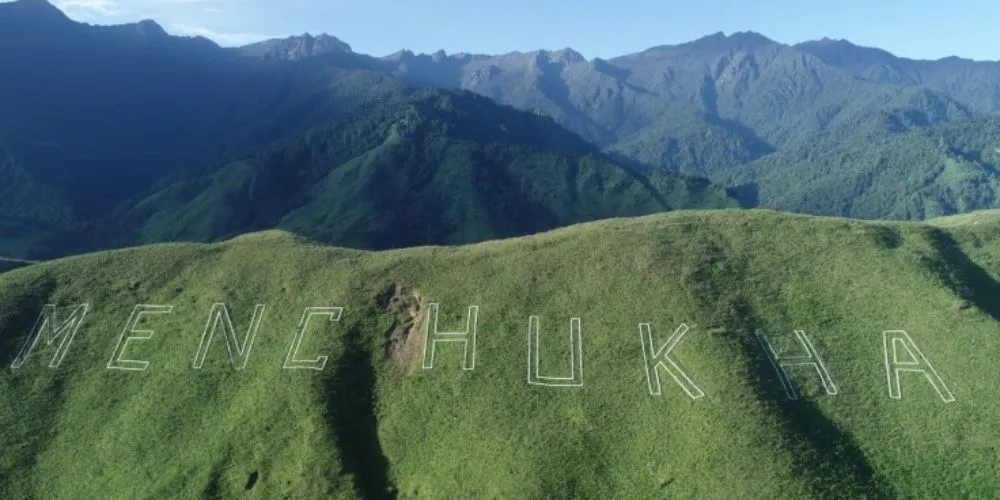
Image Source of Mechuka @ mechukatourism
Stay Options: Homestays with a Heart
Forget big hotels, homestays rule Mechuka. This is where you experience Adi and Memba tribal hospitality, butter tea, bone-warming fireplaces, and stories of the land. Stay at least 3–4 nights to soak in the valley’s rhythm.
- The Secluded Paradise Homestay: A traditional wooden home with a bukhari (room heater) in the common area, spacious rooms, and views that look painted. Run by an Adi family, it offers homemade food, endless tea, and deep conversations about local culture, language and folklore.
- Other homestays near the old gompas and village centre offer basic but cozy rooms, hot meals, and help with local guides and taxis.
Places to Visit in Mechuka
- Hanuman Point: A natural marvel, Hanuman Point (often called Hanuman Camp) is one of Mechuka’s most intriguing spots. By the roadside stands a small shrine to Lord Hanuman, but the real surprise is a rocky hill where the natural formation resembles Hanuman’s face, complete with forehead and nose if you see it from the right angle. The viewpoint here opens up sweeping vistas of the valley and the Siyom (Yargyap Chu) river. Visit around sunrise or late afternoon for dramatic light. It’s a peaceful, slightly surreal blend of spirituality and geology.
- Samten Yongcha (Samten Yangchag) Monastery: The 400-year-old Samten Yongcha / Samten Yangchag Monastery is Mechuka’s spiritual and cultural heart. Perched on a hill on the western side of the valley, it offers a bird’s-eye view of the town and surrounding mountains. Inside, you’ll find old wooden architecture, ancient manuscripts, colourful guardian deities, masks for folk dances, and a deep, meditative silence.
Nearby lies a tranquil Buddhist stupa and meditation spots where monks and visitors sit quietly, with high peaks as their only audience. During Losar and other festivals, the monastery bursts into colour with masked dances and rituals; an unforgettable experience if your dates align.
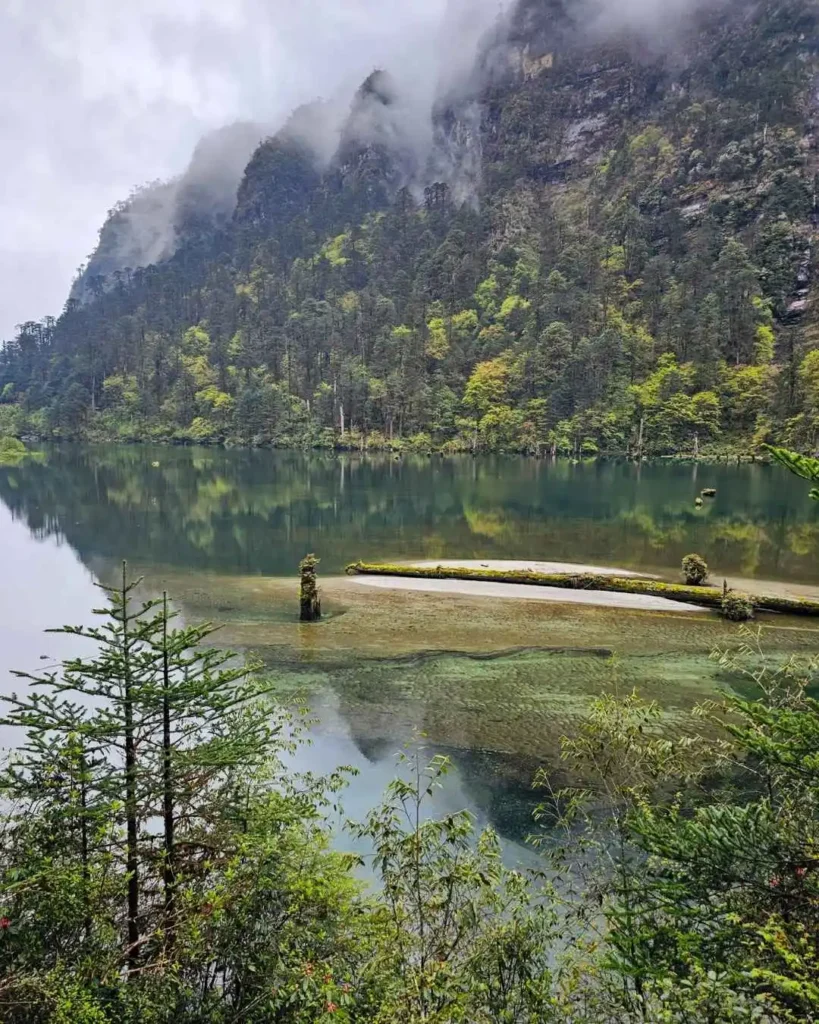
Image Source of Mechuka @ mechukatourism
Not-to-Miss Activities and Sightseeing in Mechuka
- Riverside Walks: Follow the riverbank along the Yargyap Chu, crossing wooden hanging bridges and passing locals washing clothes, kids playing, and women weaving in the sun. It’s slow travel at its best.
- Dorjeeling Village: Known as the “Balcony of Mechuka,” this village sits above the valley, offering panoramic sunrise and sunset views, meadows, and traditional Memba homes. Sip butter tea with locals and stay in a family-run homestay if you can.
- Gurudwara Patthar Sahib (Guru Nanak Taposthan): A sacred spot where Guru Nanak is believed to have meditated. The gurdwara is managed by the Indian Army and exudes calm.Hanging Bridges: Traditional rope-and-wood bridges criss-cross the river; walking across them is a gentle thrill and a photographer’s delight.
- WWII Airfield and Army Viewpoints: A relic from World War II sits quietly in the valley, and some army viewpoints (with permission) offer striking high-altitude panoramas.
- Nature Walks & Short Hikes: Almost any direction out of town leads you into fields, pine patches, or ridge trails. Expect kingfishers, wagtails, and sometimes Himalayan griffons in the sky.
OЫeat Experiences & Detours
- Monk Meditation Caves: Hidden in cliffs and forests around the valley, some caves are used by monks for deep meditation. They’re cool, dark, echo-free spaces where sound and light almost vanish. You’ll need a local guide or monk to show the way.
- Yak Farm Visits: Spend time at highland grazing sites, watch yak herding, taste yak milk products, and understand the rhythms of tribal life.
- Aalo & Pasighat: On your way in or out, spend a night in Aalo (for riverside walks and oranges in season) and Pasighat (for Siang riverfront, hanging bridges, and local markets).
These stops break the long journey and add depth to your Arunachal itinerary.
Local Travelling, Food, and What to Pack
Within Mechuka, you’ll mostly get around by walking, taxis, or shared local vehicles. Distances are small, but gradients can be steep, so good fitness helps.
Food: Expect simple, hearty mountain fare; rice, vegetables, noodles, momos, thukpa, local greens, and sometimes pork or yak meat. Don’t miss:
- Butter tea and local breads in Memba homes
- Homemade pickles and chutneys
- Rice beer (apong) in some villages, if offered respectfully
What to Pack:
- Warm layers (thermal innerwear, fleece, padded jacket, gloves, cap), especially October–April.
- Good trekking/walking shoes with grip.
- Rain protection (poncho or jacket) outside winter.
- Torch/headlamp and power bank (power cuts do occur).
- Basic medicines, including motion sickness tablets.
- Sunscreen, lip balm, and sunglasses; high-altitude sun can be sharp.
- Copies of your ILP and ID proof.
Pro Tip: Mobile networks can be patchy; download offline maps and keep some cash handy as ATMs are limited.
What Makes Mechuka Truly Special
Mechuka stands out even in a region as rich as the North East. It’s remote yet welcoming, wild yet gentle. You see Tibetan Buddhist gompas across from small Hindu shrines like Hanuman Point, Guru Nanak’s legacy sharing space with Memba and Adi traditions, and Indian Army outposts standing silently alongside centuries-old monasteries.
Unlike crowded hill stations, there are no malls, no neon signboards, no big brands, just wooden houses, smoky kitchens, and star-filled skies. Here, you don’t chase “things to do”, you let the valley set the pace. Walk, listen, watch, sip, and simply be.
For travellers from across India, Mechuka is not just a destination; it’s a reminder of how quietly beautiful, layered, and diverse this country really is.
By: Anushka Singhal